
Last updated September 21, 2026
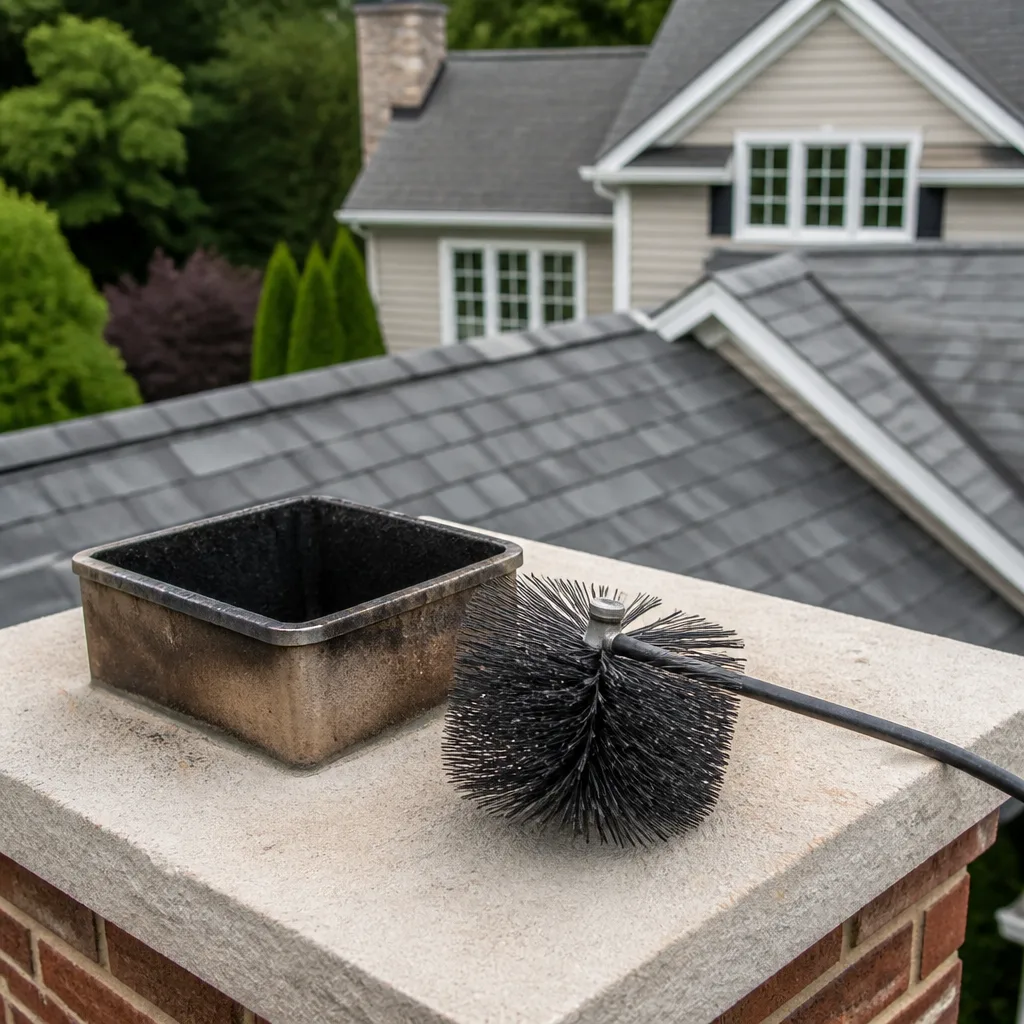
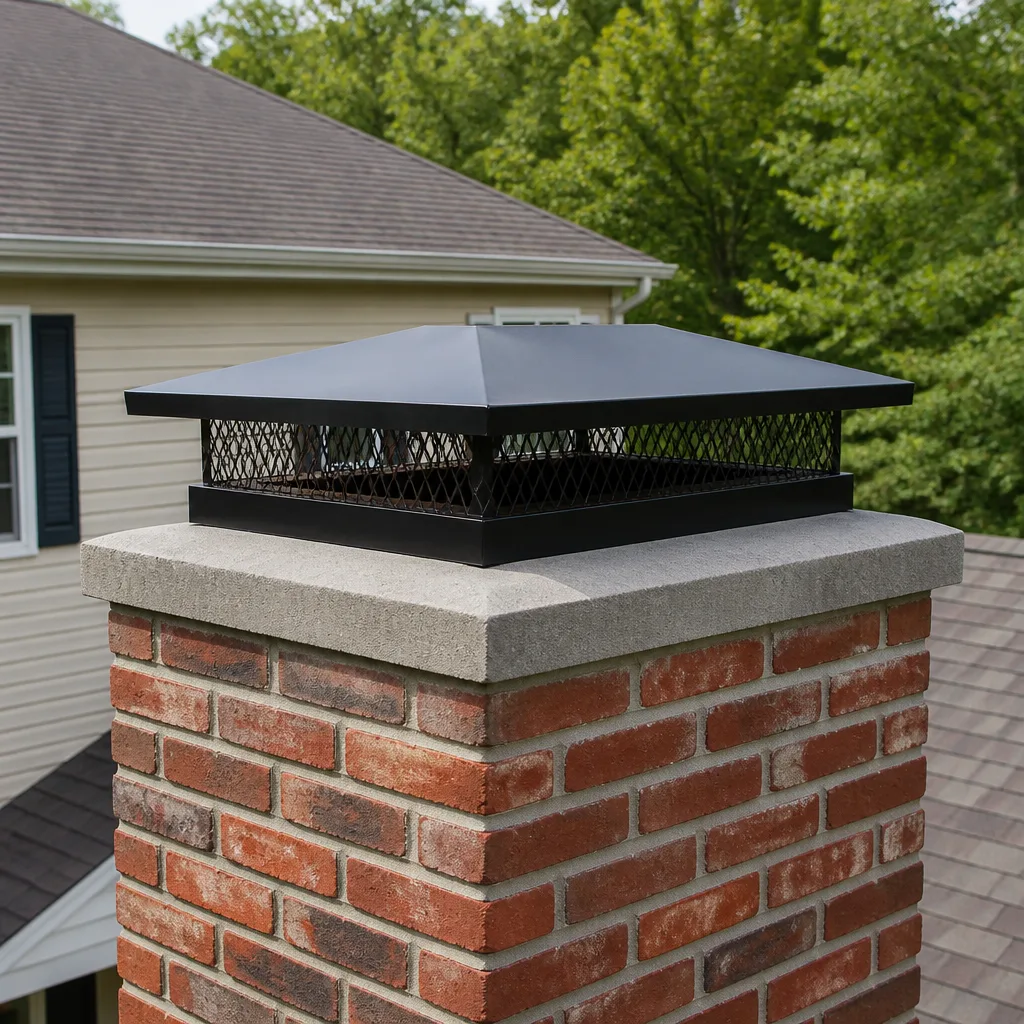
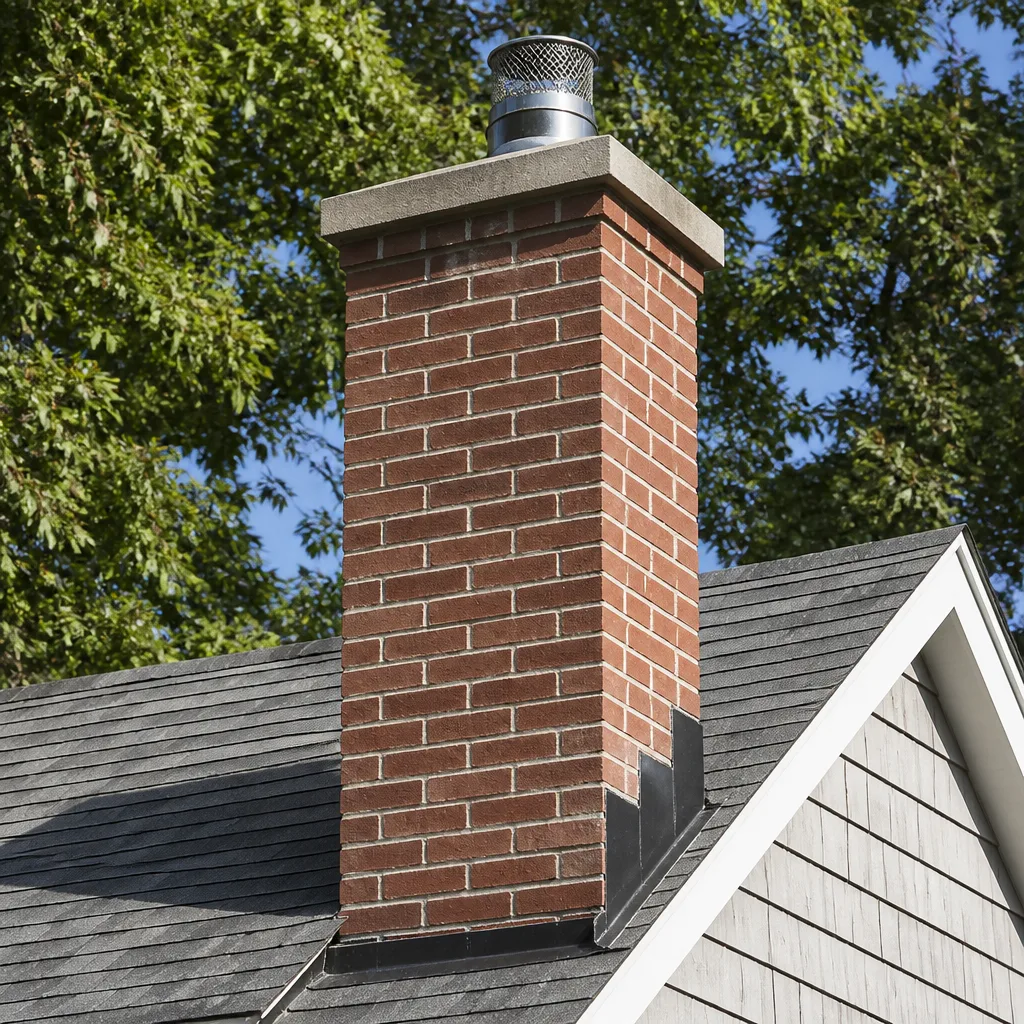
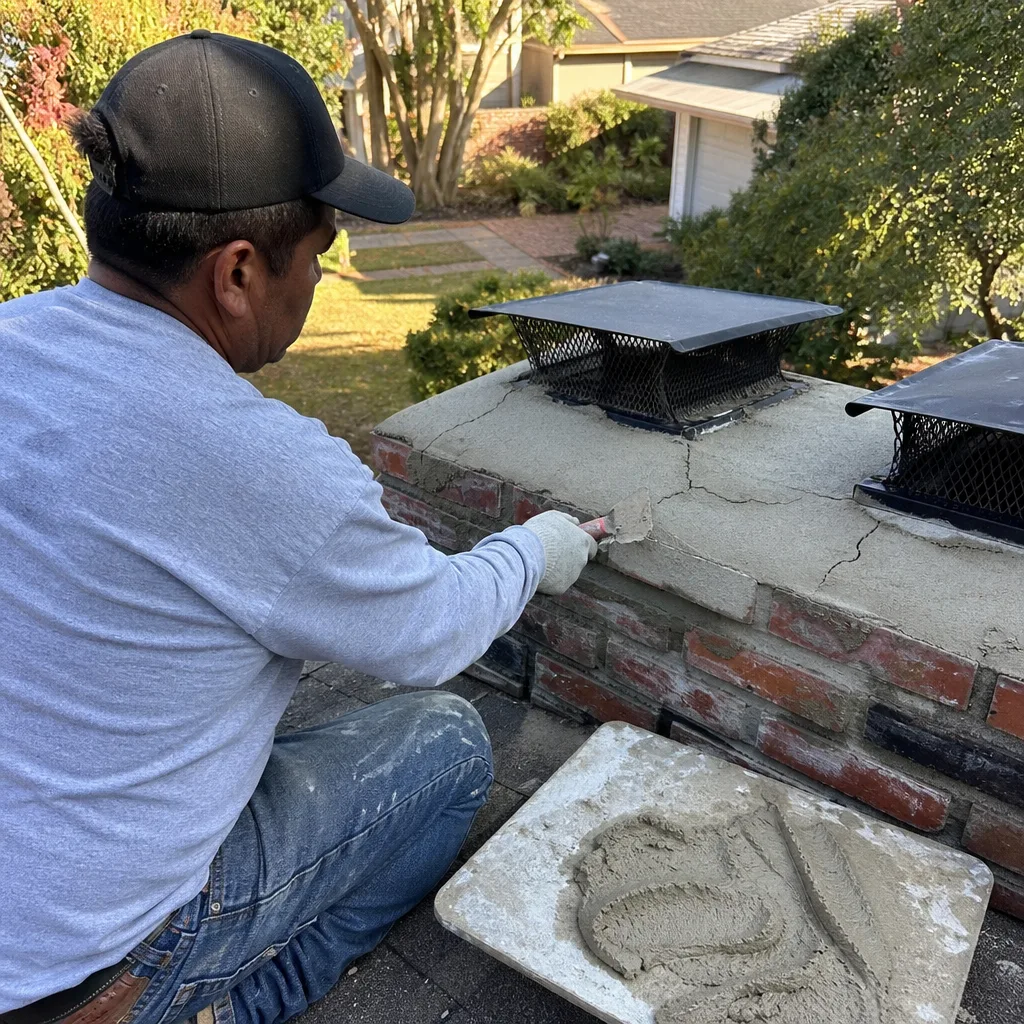
Level 1 sweep and inspection to the NFPA 211 annual standard - flue, crown, cap, and flashing checked and photographed
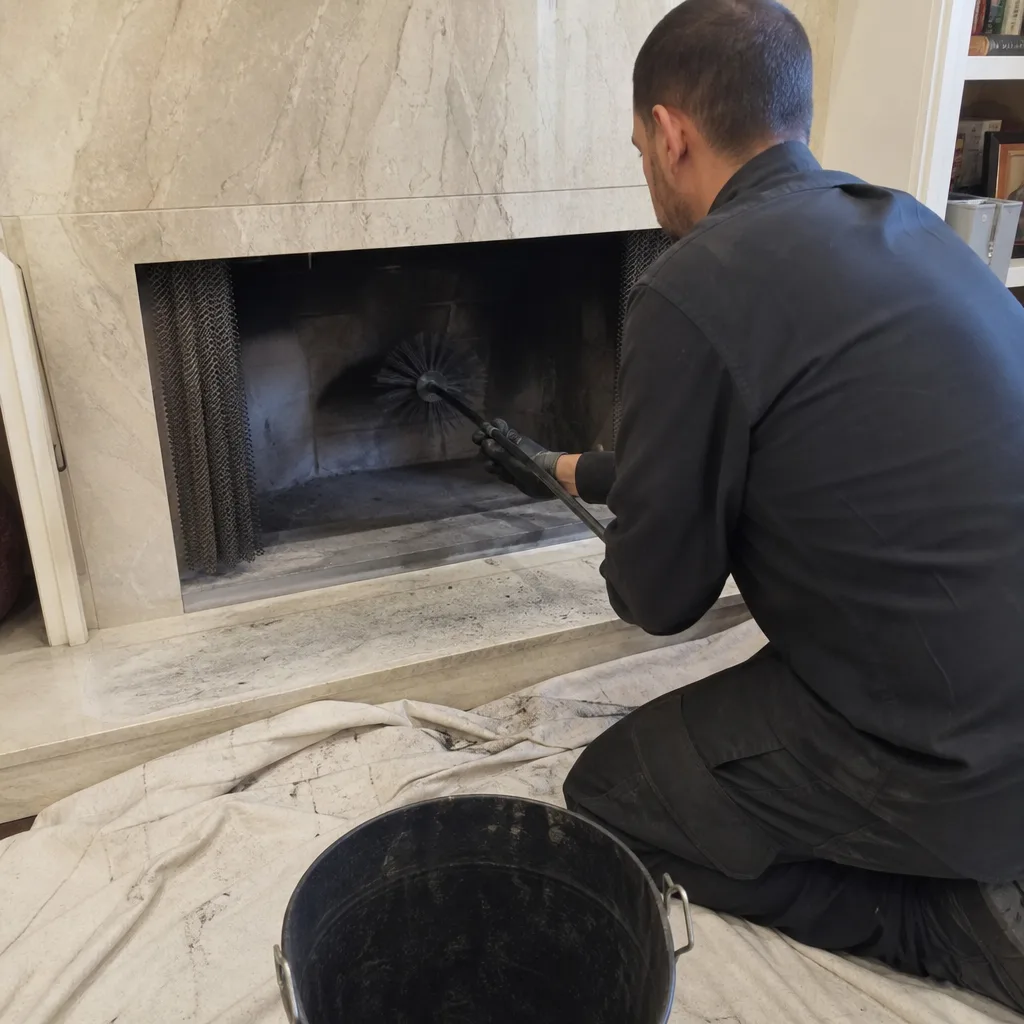
Chimney sweep logs do not sweep chimneys. They loosen some creosote - which then falls where a brush and vacuum still have to collect it.
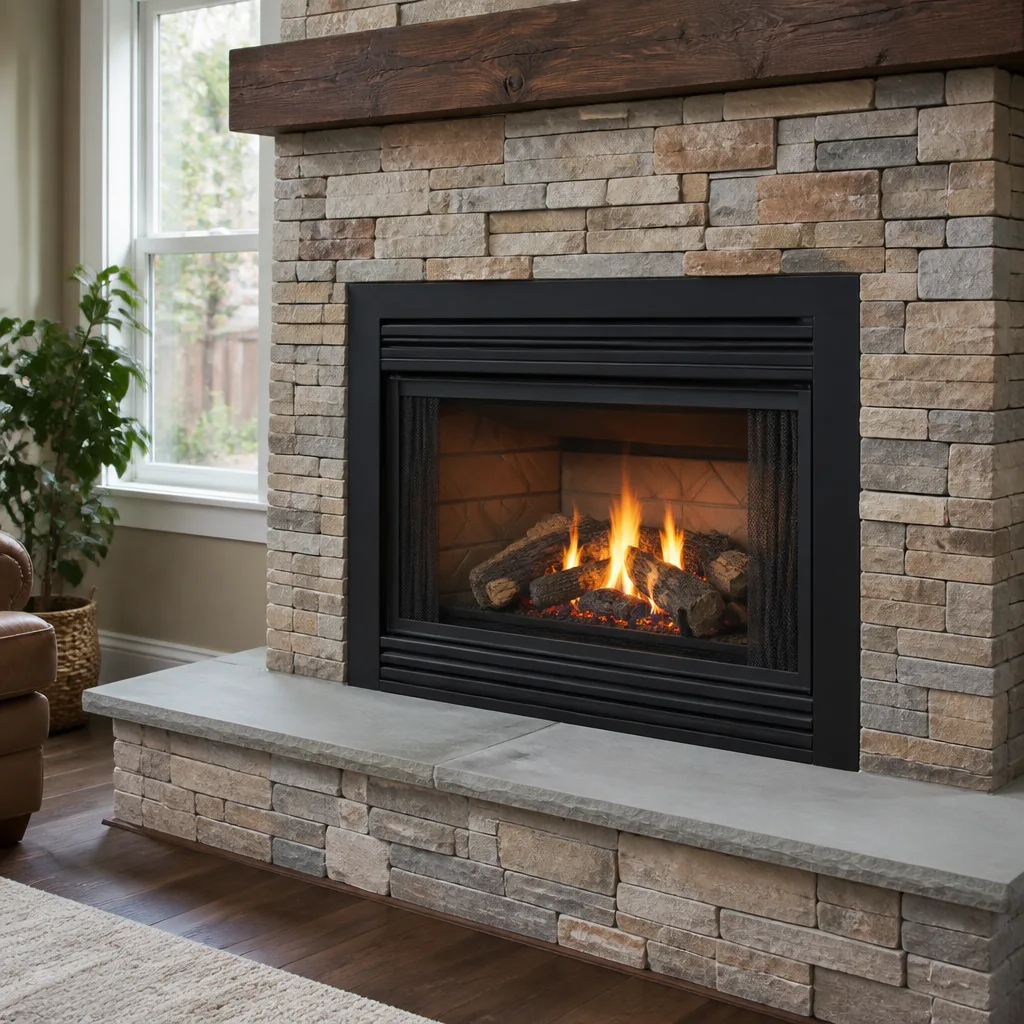
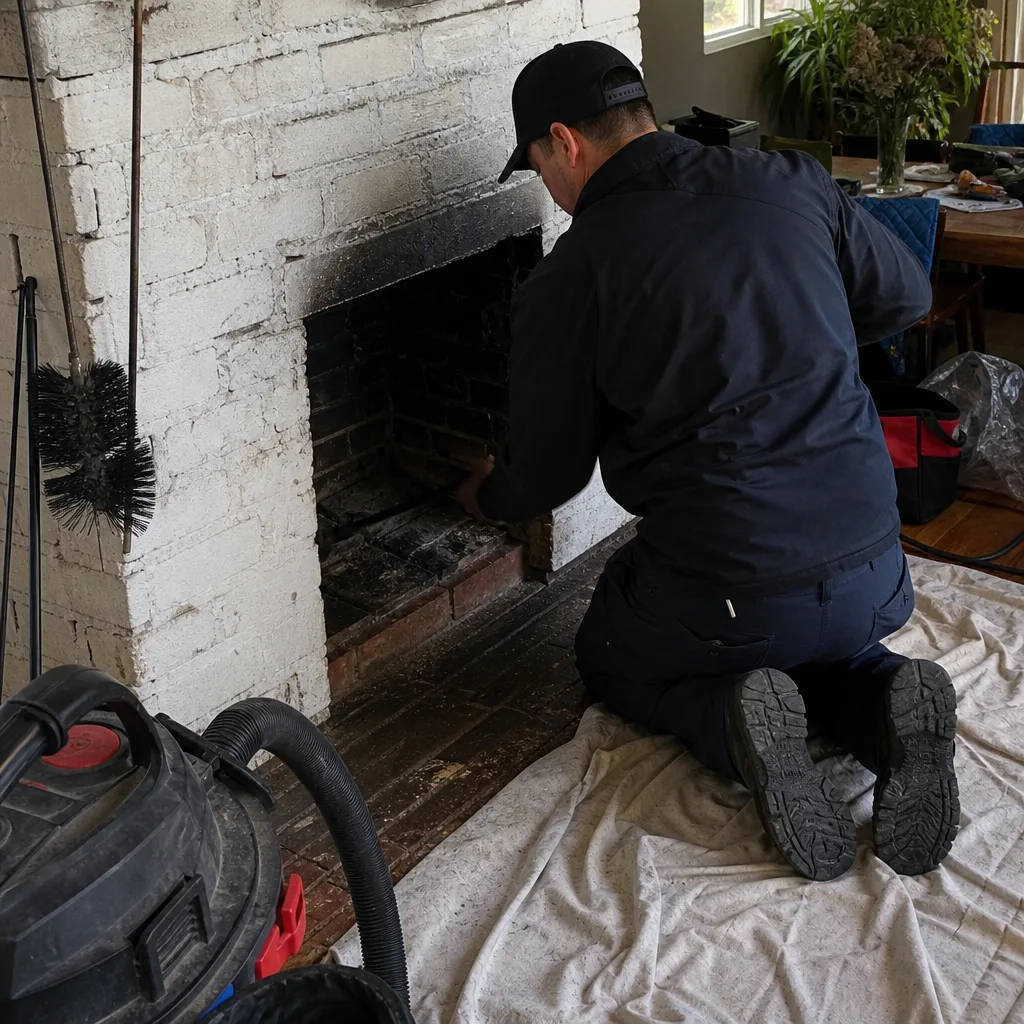 Before
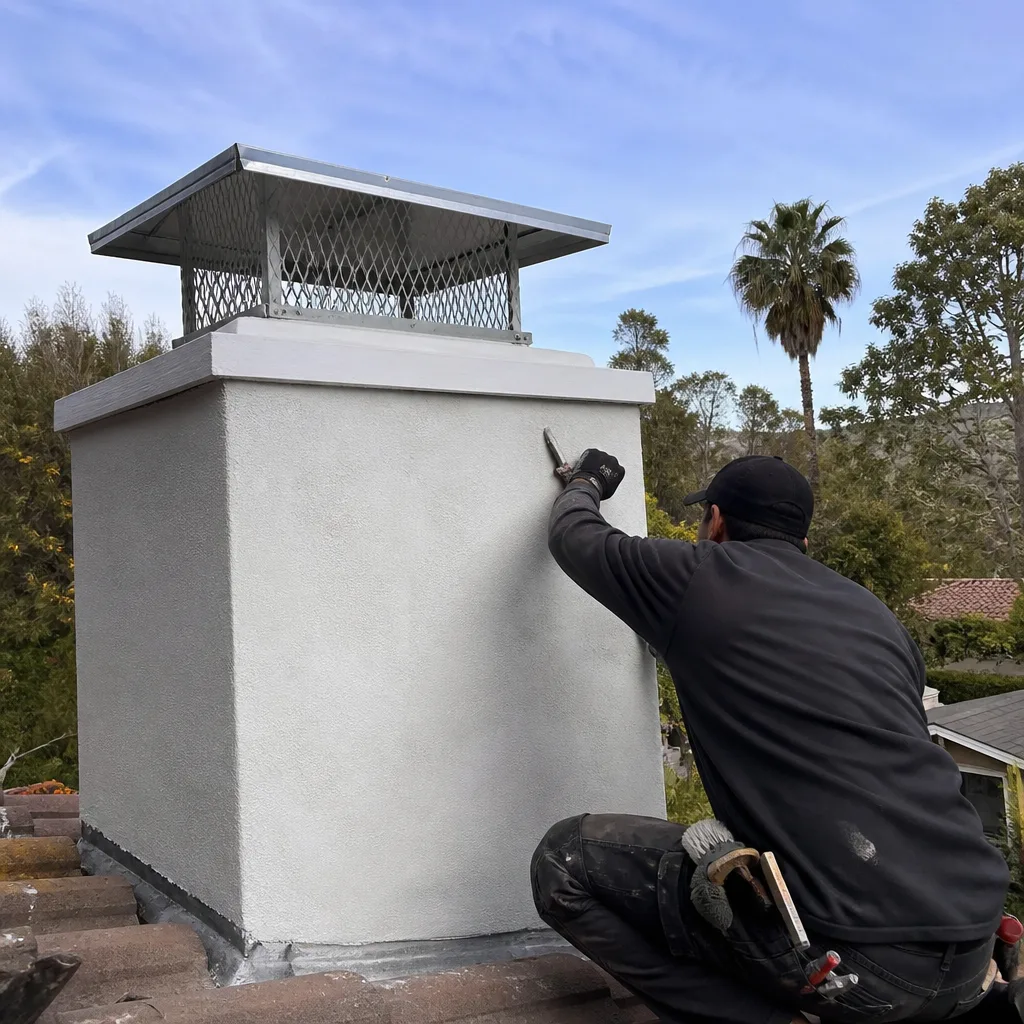 After
After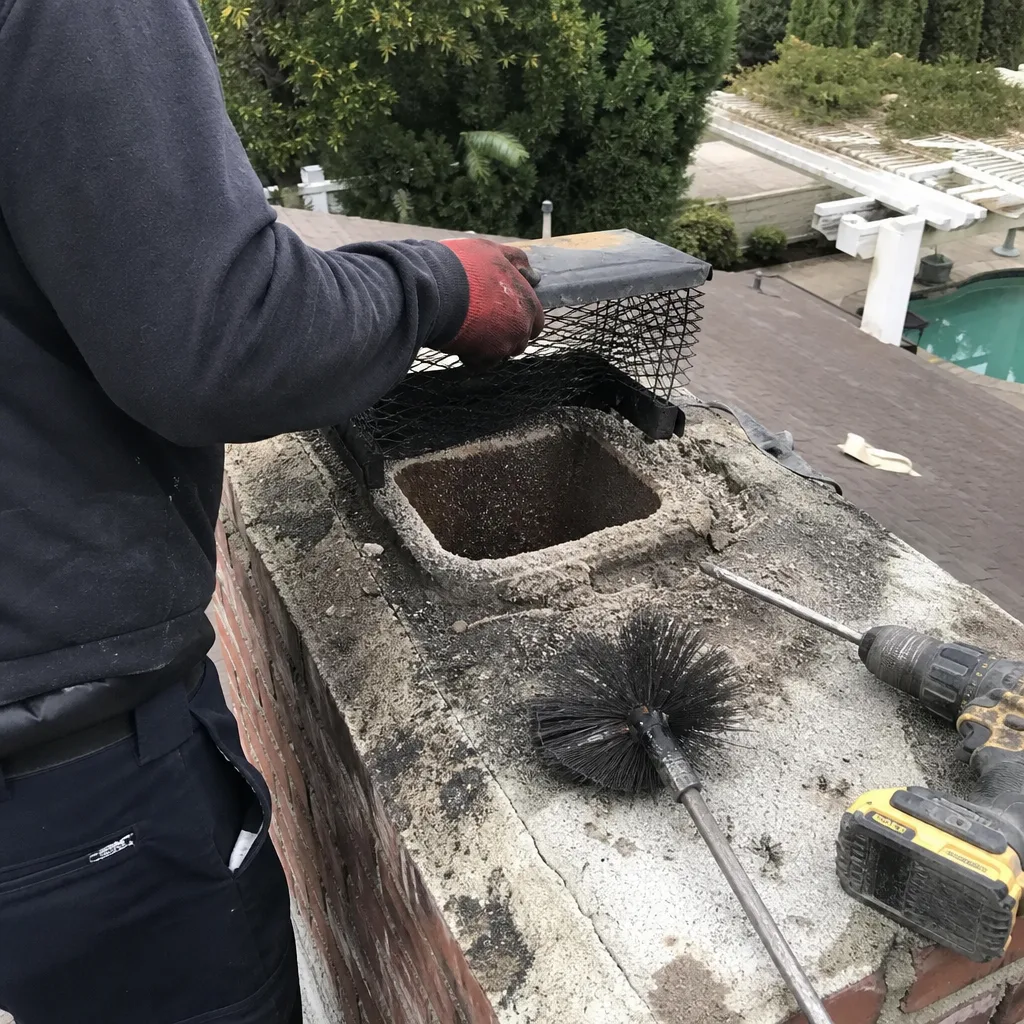 Before
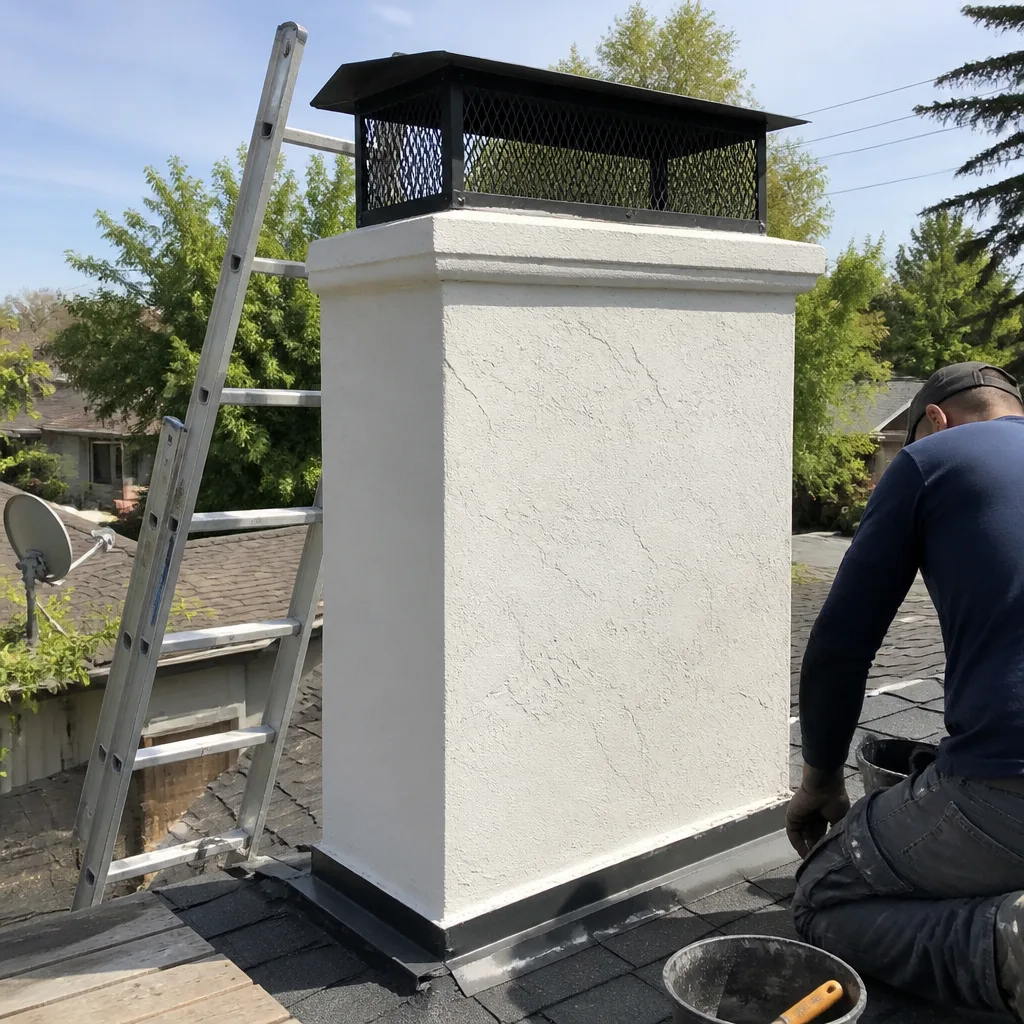 After
After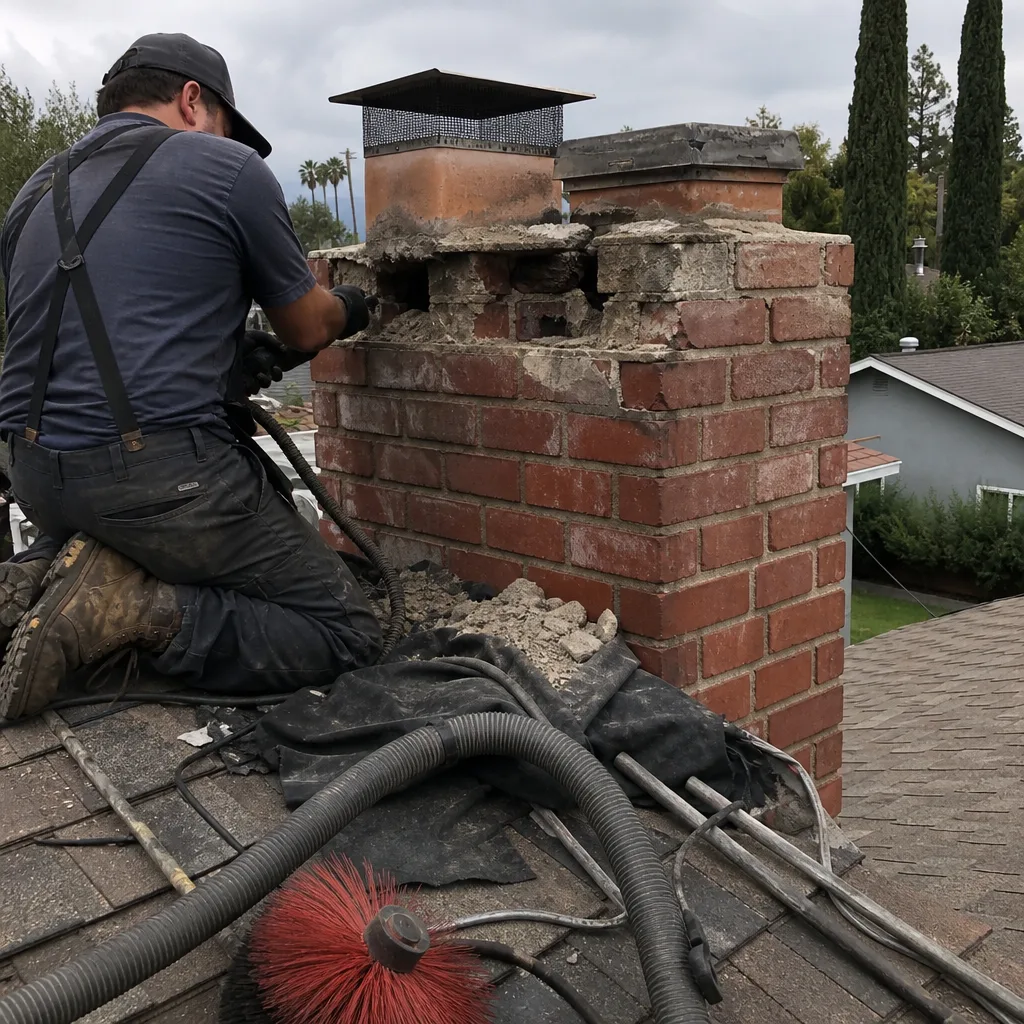 Before
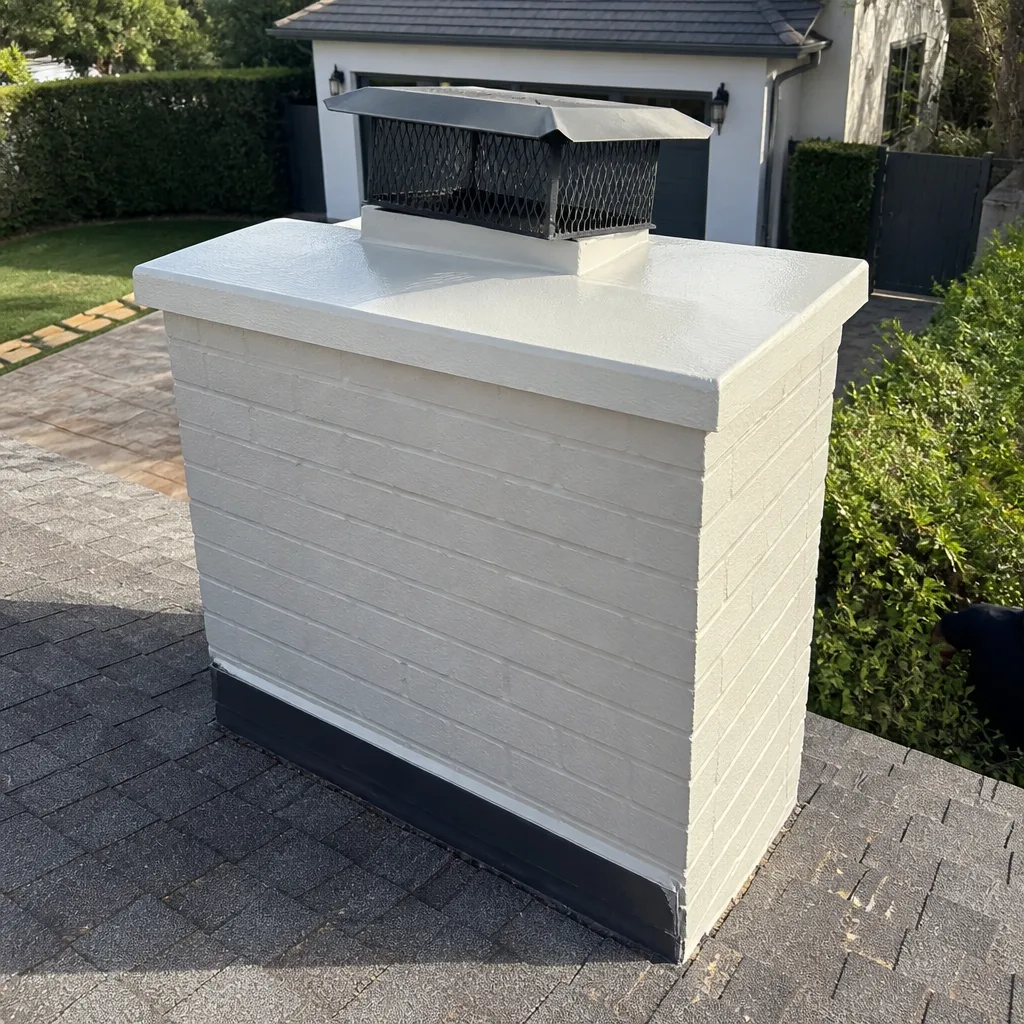 After
AfterChimney Cleaning Warning Signs: A Sherman Oaks Homeowner’s Reference Guide
Smoke backing into your living room gets attention. But the warning sign that precedes most chimney fires - glazed creosote forming a hard black shell on the upper flue liner - produces no smell, no visible residue in the firebox, and no draft problem you’ll notice from the sofa. By the time you can see or smell a problem from the hearth, you’re already past the warning stage. In Sherman Oaks, where many homes built between 1950 and 1985 still have original clay tile liners and earthquake micro-movement has been stressing masonry for decades, knowing which signs demand immediate action and which can wait for your next scheduled service isn’t just helpful. It’s the difference between a routine sweep and an emergency call. Our complete guide to chimney cleaning in Sherman Oaks organizes warning signs into a three-tier triage system built specifically for the materials, climate, and seismic conditions we encounter in Sherman Oaks homes.
Quick Answer
The most critical chimney warning signs in Sherman Oaks are: visible cracking in the firebox or flue liner, a strong sulfur or rotten-egg smell, and flame paths visible outside the firebox - all of which mean stop using the fireplace immediately. Smoke puffback, slow draft, and flaking creosote require service within 30 days. Minor cap deterioration, light smoke staining above the mantel, and small exterior efflorescence deposits should be documented and reviewed at your next annual inspection. Most serious chimney hazards develop silently in the upper flue, which is why NFPA 211 Level 2 camera inspection is the only reliable detection method for homes in this region.
Table of Contents
- Stop-Use-Now Signs: Immediate Hazards
- 30-Day Signs: Schedule Service Soon
- Monitor-at-Next-Service Signs
- Sherman Oaks-Specific Warning Signs
- How to Identify Creosote Stage from the Firebox
- Signs That Appear After Periods of Non-Use
- What Camera Footage Reveals
- Common Mistakes to Avoid
- When to Call a Professional
- Frequently Asked Questions
BeforeAfterStop-Use-Now Signs: Immediate Hazards
These signs indicate active conditions that can lead to chimney fire, carbon monoxide intrusion, or structural failure. Stop using the fireplace immediately and call for inspection.
Visible Cracking in Firebox or Flue Liner
Cracks in the firebox refractory panels or clay tile flue liner create direct pathways for heat, flames, and combustion gases to reach combustible framing. In Sherman Oaks, we see this most often in homes with original construction from the 1960s and 1970s, where thermal cycling over 50+ years has degraded clay tile joints. A crack you can see from the firebox opening is almost always worse above, where inspection requires a camera.
What to look for:
- Hairline cracks radiating from corners of firebox panels
- Missing chunks of refractory material exposing metal backing or masonry
- Gaps between flue tiles visible when looking upward with a flashlight
- Shifted or tilted tile segments (indicates liner collapse in progress)
The danger isn’t theoretical. A cracked flue liner can allow temperatures exceeding 2,000°F to reach wood framing within minutes during a chimney fire. In our experience inspecting Sherman Oaks homes, roughly 15% of unlined or damaged-liner chimneys show evidence of previous pyrolysis - slow, low-temperature charring of adjacent wood that lowers its ignition point over years of normal use.
Strong Sulfur or Rotten-Egg Smell
A pronounced sulfur odor from the fireplace or at exterior chimney surfaces indicates active moisture intrusion combined with combustion residue, producing sulfuric acid that attacks mortar and liner materials. This smell means water is actively penetrating the chimney system and reacting with creosote deposits. The resulting acidic solution degrades clay tile, corrodes stainless steel liners, and damages masonry from the inside out.
In Sherman Oaks, this pattern correlates strongly with failed chimney crowns and deteriorated mortar joints on south- and west-facing exposures, where thermal loading is highest. The smell often intensifies after the first fall rains, when summer-dry cracks in crown mortar allow sudden water penetration.
Visible Flame Paths Outside the Firebox
Any flame, glowing material, or sparks visible in areas outside the intended combustion chamber indicates a breach in the fire containment system. This includes:
- Flames visible through cracks in firebox walls
- Glowing or sparking material in the smoke chamber (visible from the damper area)
- Discoloration or charring on exterior chimney surfaces or adjacent walls
- Smoke or heat marks on mantel, surround, or wall materials above normal levels
This is an active fire emergency. Extinguish the fire if safely possible, evacuate, and contact the fire department. Do not use the fireplace again until a Level 2 inspection documents the breach and repairs are completed.
Spalling Brick or Mortar on Exterior
When brick faces flake off or mortar joints erode to finger-width gaps, the chimney’s structural integrity is compromised. Spalling results from freeze-thaw cycling of moisture-saturated masonry. While Sherman Oaks has mild winters compared to snow-country markets, our occasional hard freezes following winter rain events are sufficient to damage moisture-compromised chimneys. We’ve documented active spalling on chimneys in the hills above Ventura Boulevard where microclimates produce colder overnight temperatures than the valley floor.
A spalling chimney can shed material onto roofs, into yards, or - in worst cases - experience partial collapse during seismic events. The 1994 Northridge earthquake damaged hundreds of chimneys across the San Fernando Valley; weakened masonry from moisture damage was a significant contributing factor.
30-Day Signs: Schedule Service Soon
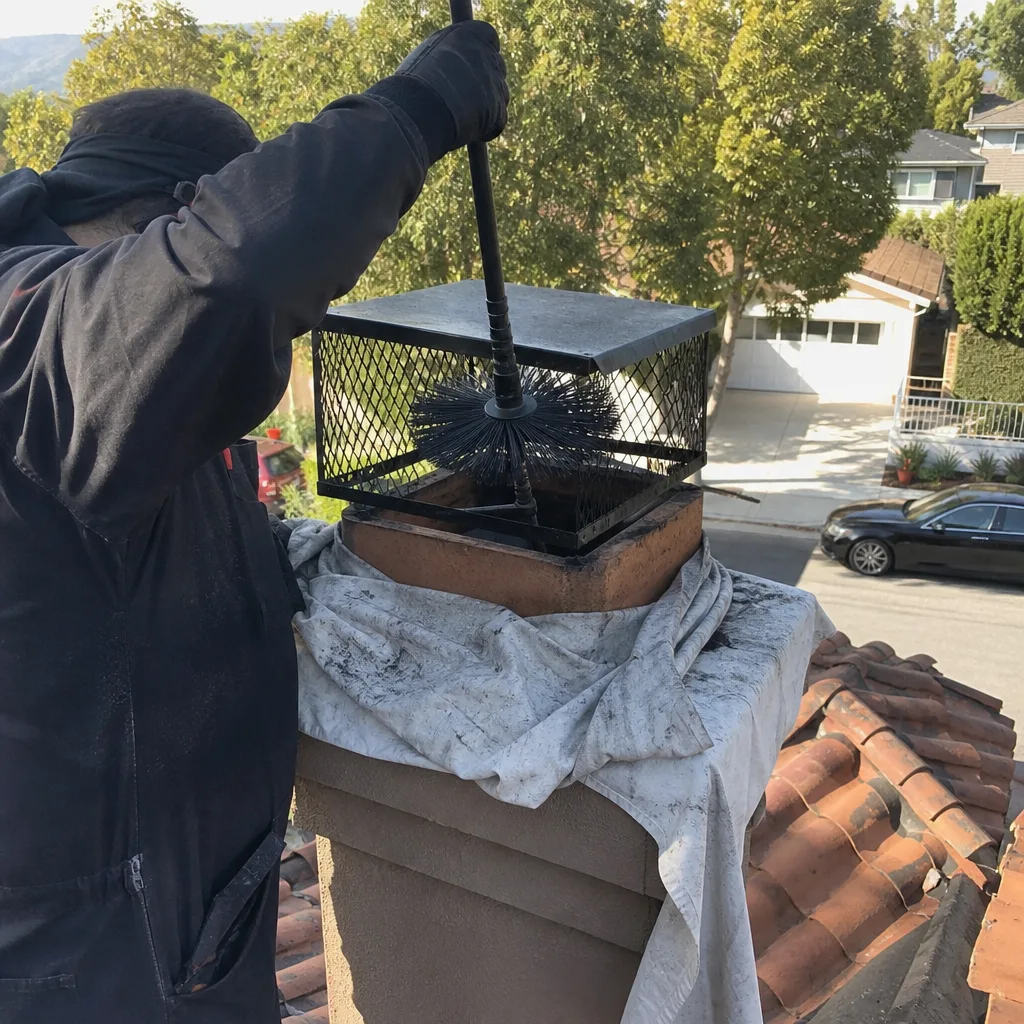
These conditions indicate developing problems that require professional evaluation and likely cleaning or repair within a few weeks; see our DIY vs professional chimney cleaning guide to help decide your next step. Continued use with these signs increases risk incrementally.
Smoke Puffback at Start of Fire
Smoke entering the room when lighting a fire, then clearing once the flue warms, suggests inadequate draft due to creosote buildup, chimney height deficiency, or negative pressure conditions in the home. In Sherman Oaks, we see this frequently in homes with modern HVAC systems and tight building envelopes that create negative pressure competing with the chimney’s natural draft.
However, puffback can also signal partial flue blockage from bird nests, collapsed liner sections, or significant creosote accumulation. The distinction matters: a draft problem from house pressure can sometimes be addressed with makeup air or damper adjustment, while blockage requires immediate cleaning. Camera inspection resolves the ambiguity.
Slow or Lazy Draft
A fire that burns sluggishly, with flames leaning toward the room or smoke lingering in the firebox, indicates the chimney isn’t pulling combustion gases upward efficiently. Causes include:
- Progressive creosote buildup narrowing flue diameter
- Damper corrosion or misalignment preventing full opening
- Smoke chamber accumulation reducing transition efficiency
- Exterior chimney height insufficient for current conditions (often after additions or landscaping changes)
- Competing exhaust appliances (range hoods, dryers) creating pressure imbalances
We document draft performance with a manometer during Level 2 inspections, comparing actual draw against calculated requirements for the fireplace opening and flue size. A reading below 0.02 inches water column at start-up typically correlates with user-reported draft complaints.
Visible Creosote Flaking
Black, flaky material accumulating on firebox walls, damper surfaces, or smoke shelf indicates active creosote deposition exceeding normal levels. The flakes themselves are second-degree creosote - brittle, relatively easy to remove, and still in a stage where professional sweeping is straightforward. Left unaddressed, this material progresses to third-degree glazed creosote, which requires chemical treatment or mechanical removal with specialized equipment. Learn how to hire a chimney cleaning contractor in Sherman Oaks to handle this safely.
Flaking frequency correlates with burning habits: unseasoned wood, restricted air supply, and smoldering fires accelerate deposition. In Sherman Oaks, where many homeowners burn decorative fires on weekend evenings rather than as primary heat, the tendency to damp fires low for ambiance produces exactly the slow, cool combustion that generates maximum creosote.
White Staining on Exterior Masonry (Efflorescence)
White, powdery deposits on brick or stucco chimney surfaces indicate moisture moving through masonry and depositing soluble salts. Unlike the stop-use-now sulfur smell, dry efflorescence without active dripping or interior moisture suggests chronic but not acute water intrusion. The underlying cause - failed crown, deteriorated flashing, or porous masonry - still requires correction to prevent progressive damage.
We’ve mapped efflorescence patterns across Sherman Oaks neighborhoods and find higher incidence in homes with original stucco chimney chases, where moisture infiltration at the chase top propagates down interior surfaces before becoming visible. The chase top itself, typically a flat or minimally sloped metal lid, is a common failure point we inspect with camera extension poles from roof level.
Monitor-at-Next-Service Signs
These conditions warrant documentation and review at your next scheduled annual inspection but don’t require immediate service call if the fireplace is otherwise performing normally.
Minor Cap Deterioration
Surface rust on galvanized steel caps, slight mesh distortion, or loosened fasteners are maintenance items, not emergencies. A cap’s primary functions - excluding wildlife, shedding water, and containing sparks - remain intact with minor deterioration. We photograph and measure cap conditions during each inspection, tracking progression year-over-year. Replacement becomes appropriate when mesh openings exceed 5/8 inch (allowing squirrel entry) or when rust has perforated the lid surface.
Our standard cap installations use stainless steel or copper materials from Famco and Olympia Chimney, selected for the specific flue configuration and local wind exposure. The additional cost over galvanized steel is typically recovered in extended service life, particularly for coastal-influenced Sherman Oaks conditions where salt air accelerates corrosion.
Light Smoke Staining Above Mantel
Faint discoloration on wall or mantel surfaces directly above the fireplace opening indicates minor smoke escape during start-up or unusual draft conditions. This is common with shallow fireplaces or when using undersized firewood that allows flames to lick forward. The staining itself is cosmetic; the underlying question is whether it represents ongoing leakage or isolated incidents.
We document stain location, extent, and progression with dated photos. If staining expands between annual inspections, it signals a developing draft or construction issue requiring correction. Stable, minor staining with no other performance changes typically indicates user technique rather than system defect.
Small Exterior Mortar Joint Cracks
Hairline cracks in crown mortar or between brick courses, without associated spalling, displacement, or interior moisture evidence, are normal thermal movement in masonry structures. We monitor these with photo documentation and caliper measurements. Intervention thresholds: crack width exceeding 1/8 inch, vertical displacement between adjacent bricks, or crack extension below the roof line indicating structural rather than superficial movement.
Damper Operation Stiffness
A damper that requires noticeable effort to open or close, but still seats fully in both positions, indicates corrosion or creosote accumulation on pivot mechanisms. This progresses gradually and can be addressed during routine service. Sudden seizure or inability to fully close are the escalation points that move this to 30-day priority.
Sherman Oaks-Specific Warning Signs
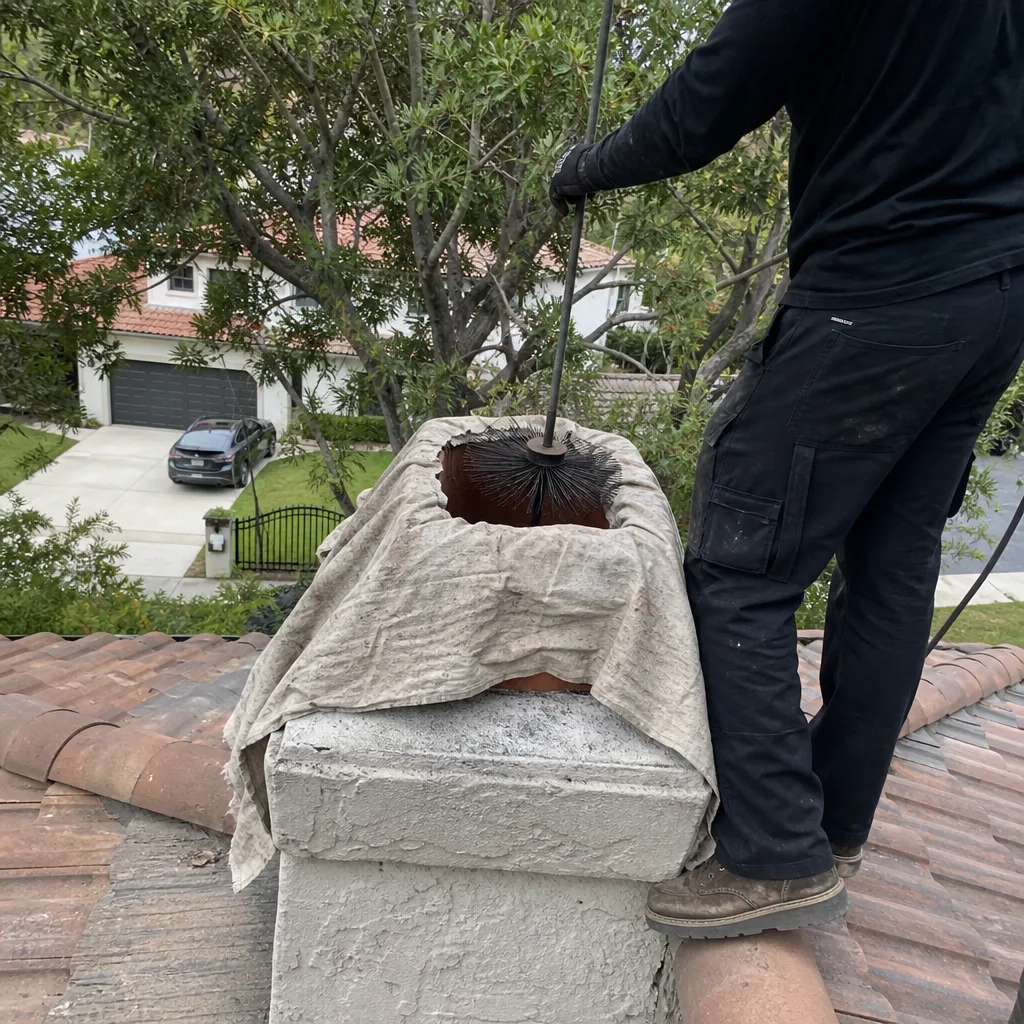
The seismic, climatic, and construction characteristics of Sherman Oaks produce warning sign patterns distinct from other Southern California markets. Understanding these local factors improves triage accuracy.
Earthquake Micro-Movement vs. Thermal Cracking
Sherman Oaks sits in a zone of ongoing minor seismic activity - not just major events like Northridge 1994, but continuous micro-movement from the Santa Monica fault system and regional tectonic stress. This produces crack patterns in chimney crowns and masonry that differ from purely thermal cracking.
Thermal cracks are typically vertical or diagonal, follow mortar joints or brick courses, and show consistent width from top to bottom. They’re caused by daily and seasonal expansion-contraction cycles.
Seismic micro-movement cracks often show horizontal displacement, stair-step patterns across multiple courses, or widening at the top of the chimney with narrowing below. They may follow no logical thermal pattern and frequently appear on multiple faces simultaneously.
The distinction matters because thermal cracks are addressed with crown repair, repointing, or sealant application. Seismic cracks may indicate foundation or structural movement requiring engineering evaluation before cosmetic repair. We’ve referred Sherman Oaks homeowners to structural engineers when crack patterns suggest active settlement rather than thermal stress, particularly in hillside construction on the north side of Ventura Boulevard where fill soils and cut slopes create differential settlement conditions.
Clay Tile Liner Degradation in Pre-1985 Construction
Homes built before 1985 in Sherman Oaks predominantly have unlined chimneys or clay tile liners installed without refractory mortar bedding. After 35-60 years of thermal cycling, these liners show characteristic failure modes:
- Tile shifting at joints, creating offset steps that catch creosote and restrict cleaning
- Vertical cracking at tile corners, often initiated by freeze-thaw in the upper flue where condensation is maximum
- Complete tile collapse in the upper 3-5 feet, where temperature differentials are greatest
Camera inspection reveals these conditions definitively. The upper flue, inaccessible from below after collapse, is where most hidden hazards develop. Our documented photo record under Haven Standard Clause 4 captures these conditions with timestamped images for homeowner review and insurance documentation.
Stucco Chase Construction in 1980s-1990s Homes
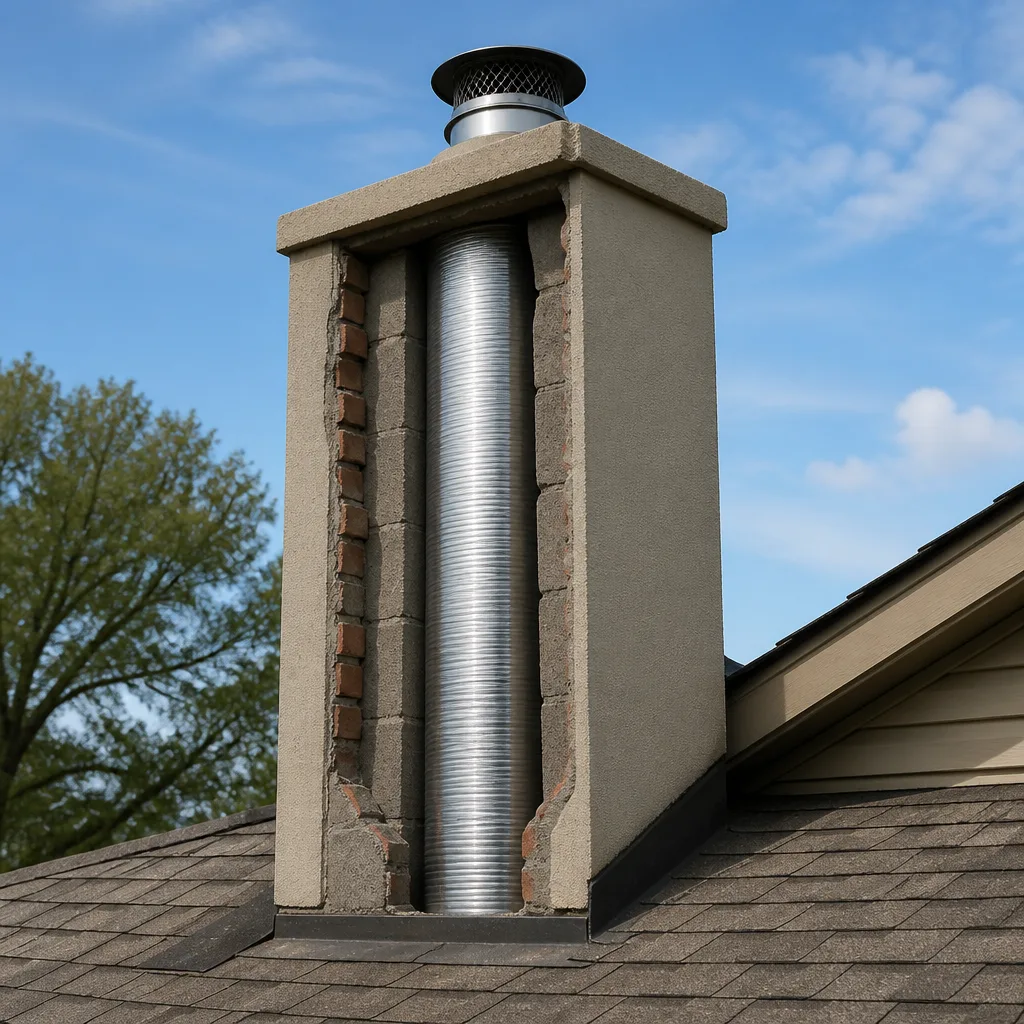
Wood-framed stucco chimney chases, common in Sherman Oaks construction from roughly 1982-1995, conceal metal or masonry flues within an architectural enclosure. Warning signs specific to this construction type include:
- Stucco cracking in vertical patterns aligned with chase corners - indicates wood framing movement or moisture swelling
- Water staining at interior ceiling adjacent to chase - typically from chase top flashing failure, often invisible from exterior
- Musty odor from chase interior - signals chronic moisture accumulation degrading framing and potentially the concealed flue
These chases require specialized inspection techniques, including borescope examination through access panels and moisture meter readings at multiple chase elevations. We’ve found concealed flue corrosion in stucco chases that appeared sound from exterior examination, with damage progressing for years before becoming visible.
How to Identify Creosote Stage from the Firebox
Homeowners can safely assess creosote accumulation through visual and tactile examination from the firebox opening, without entering the flue or disassembling components. This assessment informs urgency and helps verify professional service recommendations.
First-Degree Creosote: Soot
Appearance: Black, powdery, easily wiped away with a finger. Consistency similar to charcoal dust.
Location: Firebox walls, damper blade, smoke chamber visible above damper.
Significance: Normal combustion residue. Indicates reasonable burning practices and adequate maintenance. Routine sweeping removes this material completely.
Second-Degree Creosote: Flakes and Chunks
Appearance: Black, brittle, irregular flakes ranging from small chips to pieces several inches across. Crumbles under moderate finger pressure. May show layering like tree rings, with lighter and darker bands indicating burning pattern changes.
Location: Smoke chamber, damper hinges, upper firebox, sometimes visible on flue liner walls when looking upward with flashlight.
Significance: Indicates cooler-than-optimal combustion over extended periods. Requires professional sweeping; cannot be fully removed by homeowner methods. If present in quantity, schedule service within the current burning season.
Third-Degree Creosote: Glazed or Hardened Deposits
Appearance: Shiny, tar-like, or hardened black coating with smooth or bubbly surface. Feels hard and cannot be scratched with a fingernail. May appear as drips or runs on vertical surfaces, or as thick, crusty buildup on horizontal surfaces like smoke shelf.
Location: Upper flue liner (typically not visible from firebox without camera), smoke chamber, occasionally extending downward to damper area in severe cases.
Significance: High-risk condition. Glazed creosote has low ignition temperature and burns intensely once ignited. Professional removal requires rotary mechanical cleaning, chemical treatment, or both. This is the condition that produces no warning signs from the hearth - by the time it’s visible from below, accumulation is typically severe.
Safe examination method: With the damper fully open and fire completely cold (minimum 24 hours since last use), use a flashlight to examine the smoke chamber and visible flue liner. Wear a disposable glove and reach upward to touch accessible surfaces. Powdery residue that wipes away is first-degree. Flaking material is second-degree. Hard, shiny, or tar-like deposits are third-degree and require immediate professional service.
We document creosote stage with dated photos during every inspection, providing homeowners before-and-after verification of removal completeness. This documentation also supports insurance claims if chimney fire occurs - many insurers deny claims where maintenance records are absent.
Signs That Appear After Periods of Non-Use
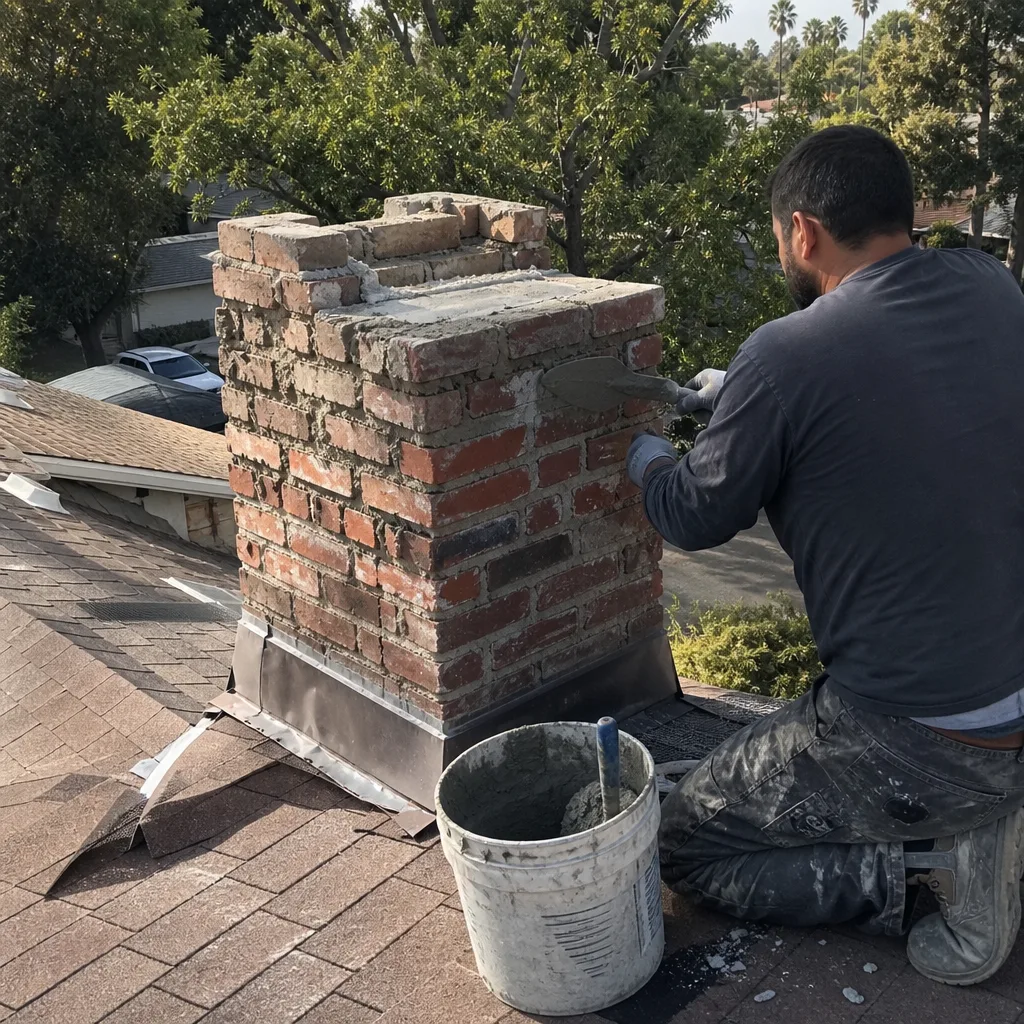
Fireplaces unused for months or years develop distinct warning sign patterns that differ from actively used systems. These are common in Sherman Oaks, where many homeowners use fireplaces only occasionally and some properties sit vacant between tenancies.
Wildlife Evidence
Bird nests, squirrel debris, or raccoon occupation are the most common post-non-use findings. Signs include:
- Twigs, leaves, or grass visible above the damper
- Droppings on smoke shelf or firebox floor
- Scratching sounds during morning or evening hours
- Missing or displaced chimney cap mesh
- Feathers or fur at firebox or cleanout access
Wildlife obstruction is a leading cause of chimney fires and carbon monoxide incidents after seasonal startup. A nest that was dry and inactive through summer becomes a fire hazard with the first fall fire. We remove wildlife debris with specialized vacuum systems and inspect for associated damage to liner or masonry before certifying the chimney for use.
Water Staining Inside Firebox
Rust-colored stains running down firebox walls, white mineral deposits on firebox floor, or damp ash residue indicate active water intrusion during non-use periods. Without regular fires to drive evaporation, minor leaks that would self-dry in active chimneys instead accumulate and accelerate deterioration.
The source is typically crown failure, flashing separation, or chase top deterioration - all addressable conditions, but with damage amplified by duration of exposure. We’ve documented clay tile liner spalling in Sherman Oaks chimneys that went two years without use, where equivalent active chimneys showed no comparable degradation.
Efflorescence on Exterior
White salt deposits that appear or intensify during non-use periods indicate moisture is moving through masonry without the drying effect of warm flue gases. This pattern helps distinguish active leaks from historical moisture: efflorescence that worsens in summer, when no fires occur, signals active water intrusion requiring correction.
We map efflorescence distribution with photos and test mortar moisture content with calibrated meters. Readings above 17% at depth indicate active saturation and likely concealed damage. Readings below 12% suggest historical moisture with probable stabilization after source correction.
Odor Development
A musty or ammonia-like odor from an unused fireplace typically indicates organic material decomposition (wildlife, leaf accumulation) or mold growth on moisture-saturated surfaces. This differs from the sulfur smell of active creosote moisture reaction. Odor characterization helps us prioritize inspection focus: organic odors direct attention to smoke chamber and flue base; sharp chemical odors suggest creosote moisture interaction in the upper flue.
What Camera Footage Reveals
The NFPA 211 Level 2 inspection, with camera scan of the full flue length, reveals conditions invisible from the firebox or roof. Understanding what this footage shows helps Sherman Oaks homeowners interpret inspection findings and verify that documentation is complete.
What We Document on Every Scan
Our inspection protocol, established in 2009 and formalized as Haven Standard Clause 4, captures:
- Flue liner condition at 12-inch intervals: Tile joints, cracks, spalling, mortar loss, and displacement are photographed with measurement reference. We note location by distance from firebox (e.g., “vertical crack, 14 feet from base, east-facing tile”).
- Creosote deposition pattern and thickness: We measure accumulation at multiple points and classify by stage. Third-degree glazed deposits are photographed with raking light to show surface texture.
- Smoke chamber and firebox throat: The transition area above the damper, where many fires originate, is examined for sloped wall condition, shelf accumulation, and structural integrity.
- Crown and flue top interior: Where accessible, we document crown underside condition, flue top alignment, and cap fit from interior perspective.
How to Read Your Photo Record
When we deliver your documented record, each image includes:
- Timestamp and technician identification
- Location reference (distance from firebox, clock-face orientation)
- Condition classification (normal, monitor, repair recommended, stop-use)
- Comparison to previous inspection images when available
Key patterns to understand: vertical cracks that align across multiple tiles indicate structural movement; circumferential cracks at tile joints indicate thermal stress; isolated corner chips are typically installation damage with limited progression risk. We explain each finding in plain terms during review, with written scope and price before any work is proposed.
The Value of Continuous Documentation
Since 2009, we’ve maintained documented records for every chimney inspected. For returning Sherman Oaks customers, this creates a condition history that reveals progression rates and predicts maintenance needs. A crack that widened 1/32 inch over three years requires different response than identical current width with no prior measurement. This longitudinal data is unavailable from companies that don’t maintain systematic records - which remains most of the market, despite NFPA 211’s documentation recommendations.
Common Mistakes to Avoid
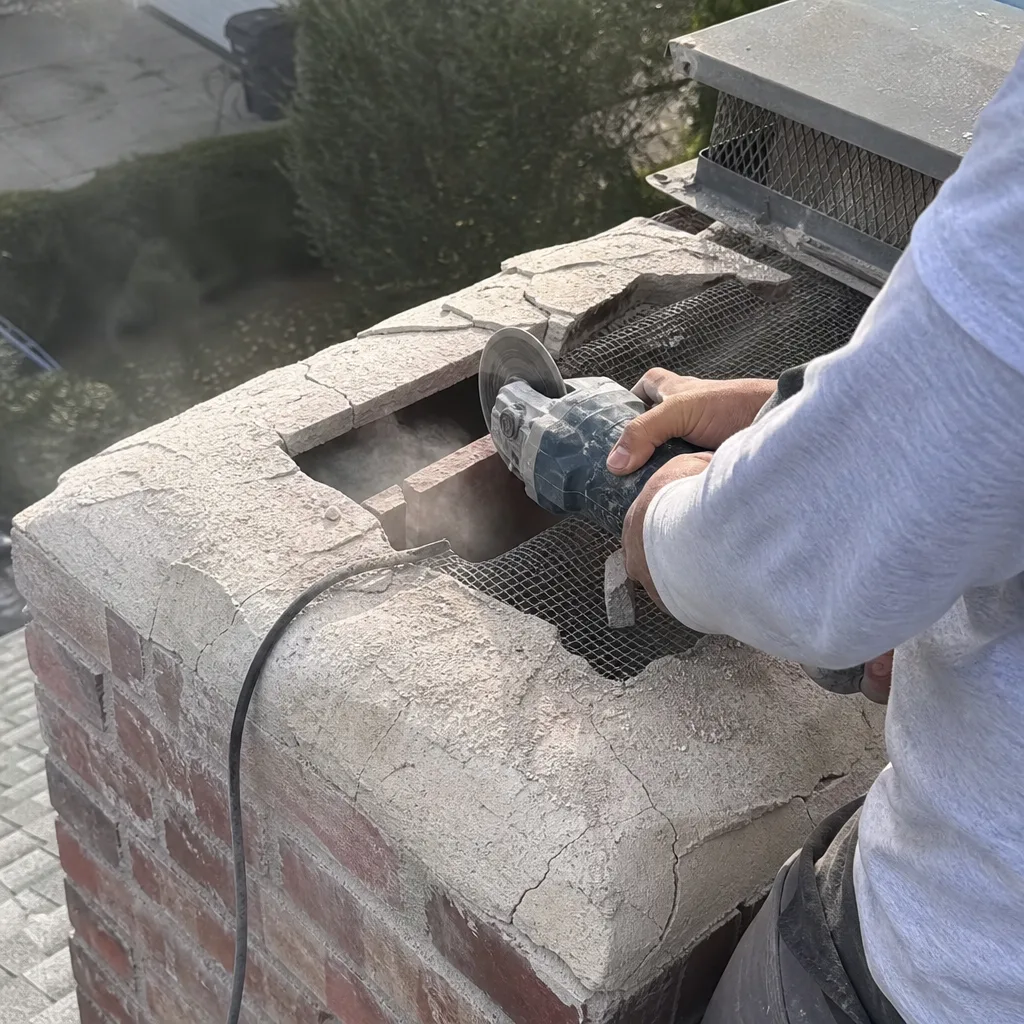
- Assuming no smell means no problem. The most dangerous chimney conditions - third-degree glazed creosote, upper flue liner collapse, concealed moisture damage - produce no odor detectable from living spaces. Relying on smell alone misses the hazards most likely to cause serious damage.
- Interpreting all cracks as thermal. In Sherman Oaks, seismic micro-movement produces crack patterns that mimic thermal stress but indicate structural issues requiring different response. Horizontal displacement, stair-step patterns, or cracks that widen toward the top suggest foundation or framing movement, not simple expansion-contraction.
- Cleaning without inspecting. A sweep that removes visible creosote from the firebox and smoke chamber but doesn’t camera-scan the upper flue may leave hazardous conditions undetected. We’ve found severe glazed creosote and liner collapse in chimneys “swept” months earlier by companies that didn’t perform camera inspection.
- Delaying service based on light use. Infrequent, decorative fires often produce more creosote per hour than primary heating fires because they’re typically burned with restricted air supply for ambiance. The homeowner who burns two weekend fires monthly may need more frequent service than one who heats daily with proper technique.
- Ignoring chase construction specifics. Stucco chases conceal conditions that exterior examination misses. Water staining on interior ceilings, musty odors, or stucco corner cracking all warrant specialized chase inspection, not standard fireplace evaluation.
- Accepting verbal estimates without written scope. Without written documentation of what’s included, what’s excluded, and what warranty applies, homeowners have no recourse if service is incomplete or damage occurs. Haven Standard Clause 1 requires written price, scope, and warranty before work begins - a practice that eliminates the common scenario of price escalation after the technician is already in your home.
- Using unseasoned or inappropriate fuel. Burning construction lumber, painted wood, or wood with moisture content above 20% accelerates creosote deposition and introduces chemical contaminants. In Sherman Oaks, where landscape trimmings are abundant, the temptation to burn olive, eucalyptus, or citrus prunings is strong - but these resinous woods produce exceptionally rapid creosote accumulation.
When to Call a Professional
Call for immediate inspection if you observe any stop-use-now sign: visible cracking in firebox or liner, sulfur odor, flame paths outside the firebox, or spalling masonry with displacement. These conditions present active hazard and require professional evaluation before any further use.
Schedule service within 30 days for smoke puffback, slow draft, visible creosote flaking, or white exterior staining with active moisture. These conditions progress predictably and are most cost-effectively addressed before escalation.
Document and review at next annual service for minor cap deterioration, light smoke staining, small mortar cracks without displacement, or damper stiffness with full closure maintained. These are maintenance tracking items, not urgent hazards.
Chimney Sweep in Sherman Oaks from Emberly Chimney Cleaners Sherman Oaks includes NFPA 211 Level 2 camera inspection, documented photo record, and written price before any work begins. We offer free estimates in Sherman Oaks - call (424) 414-6048. Our 365-Day Done Right Promise applies to every service, and we provide free second opinions on any competitor’s written estimate.
Frequently Asked Questions
A complete chimney sweep with NFPA 211 Level 2 camera inspection in Sherman Oaks typically ranges from $289 to $425, depending on flue configuration, accessibility, and creosote stage. Third-degree glazed creosote requiring chemical treatment or rotary mechanical removal adds $150 to $300. We deliver a written price before any work starts - no exceptions - and include the documented photo record as standard under Haven Standard Clause 4. Call (424) 414-6048 for an exact quote; estimates are free.
Annual inspection is recommended for all chimneys, with cleaning frequency determined by use and fuel. A fireplace burned one to two times weekly during season typically requires sweeping every 1-2 years. Daily heating use requires annual cleaning. The specific determining factor is creosote accumulation rate, which varies with wood moisture content, burning technique, and appliance efficiency. Our inspection includes measurement and classification, with cleaning recommended when accumulation reaches thresholds specified in NFPA 211.
You need liner replacement when inspection documents conditions that compromise safety: visible cracks penetrating tile thickness, gaps between tiles exceeding 1/2 inch, displaced or collapsed sections, or deterioration that prevents effective cleaning. We show you the camera footage and explain what each finding means. Nothing is recommended without photo evidence you can see for yourself, and we clearly distinguish conditions requiring immediate action from those that can be monitored. A Free Second Opinion on any competitor’s liner replacement estimate is always available.
Skipped maintenance leads to progressive creosote accumulation, with third-degree glazed deposits becoming increasingly difficult and expensive to remove. Liner damage worsens from thermal and moisture stress, eventually requiring replacement rather than repair. Water intrusion degrades masonry and adjacent framing, with repair costs typically multiplying with delay duration. Most critically, chimney fire risk increases substantially - and chimney fires frequently cause structural damage extending far beyond the chimney itself, with insurance claims complicated by maintenance record gaps. The cost of routine service is a fraction of emergency repair or deductible exposure.
Homeowners can safely perform limited visual examination from the firebox opening: checking for visible cracks, assessing creosote stage by touch, and observing damper operation. However, the critical upper flue, where most hazards develop, requires specialized camera equipment and training to evaluate. NFPA 211 specifies Level 2 inspection with camera scan for property transfers, after chimney fires, and when system changes occur. We recommend professional inspection annually, with homeowner monitoring between services for the visible signs described in this guide.
Sherman Oaks chimneys face specific conditions: earthquake micro-movement from regional fault systems produces structural crack patterns distinct from thermal stress; the 1950-1985 housing stock predominantly has original clay tile liners now at end of designed service life; hillside construction on the north side of Ventura Boulevard experiences differential settlement and microclimate temperature variation; and coastal air influence accelerates metal component corrosion compared to inland valleys. These factors make local experience and systematic documentation particularly valuable for accurate condition assessment.
The Bottom Line
Effective chimney safety in Sherman Oaks requires distinguishing between conditions that demand immediate action, those that warrant scheduled service, and those that can be monitored. The silent progression of upper flue hazards - particularly third-degree glazed creosote - means that absence of smell or visible problem from the hearth is not assurance of safety. Systematic documentation through NFPA 211 Level 2 camera inspection, maintained year-over-year, provides the only reliable basis for informed decision-making. The triage framework in this guide organizes warning signs by urgency, but professional evaluation resolves the ambiguity that visual examination alone cannot. Every chimney we’ve inspected since 2009 has received a written price before work started and a documented photo record on completion. That practice, now Haven Standard Clause 4, remains the standard we apply to every Sherman Oaks home we serve.
Written by Corrine Halstead, Owner at Emberly Chimney Cleaners Sherman Oaks, serving Sherman Oaks since 2009.